
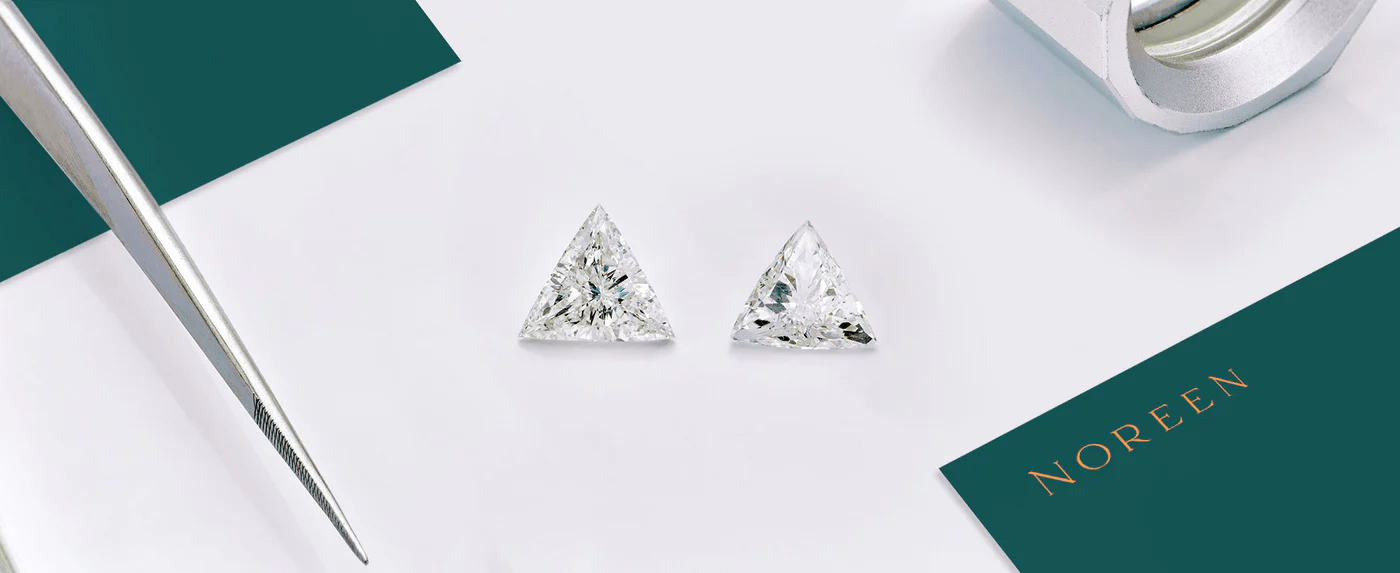
Diamonds are worthy of all the attention we give them, but choosing the
right one for yourself is not an easy task. That is why Aashvi, your
diamond expert, loves to share her knowledge.
What follows is everything you might possibly want to know about
diamonds, how they are processed and what you should look out for when
purchasing one.
Because knowing exactly what you are looking for and why empowers you to
make the best choice for yourself.
Higher carat weight does not necessarily mean a larger diamond
It took volcanic activity to bring diamonds close enough to the Earth’s
surface to be mined
Authentic diamonds nowadays come with laser inscriptions
The Marquise cut is known for making smaller diamonds appear larger
One in 5,000 diamonds is graded as flawless
To turn you into a real diamond expert, we cover all that and more in
the following sections:
Where Do Diamonds Come From
What Are Rough Diamonds
How Are Diamonds Processed
Choosing A Diamond: The4C'S
Choosing A Diamond Shape: The 10 Cuts
Ensuring A Diamond’s Authenticity: The Certification Process
Arguably the most popular gemstone of all times, the diamond, is at
least as tough as it is delicate looking. It is a well-known fact that,
being the hardest natural substance on Earth, a diamond can only be
scratched or cut by another diamond.
However, very few people know the origins of this substance and when it
was first discovered.
It was millions of years ago that the very first diamonds were formed.
Even the manner of their formation sets them apart from all other
gemstones, given that they are the only ones made up of a single element
– carbon.
Before the first diamonds could form, pure carbon needed to be exposed
to extreme heat and pressure. This all occurred at least a hundred miles
below the Earth’s surface. And if it weren’t for volcanic activity,
diamonds never would have travelled any closer.
It was over 2,400 years ago in India that people first discovered and
mined diamonds. Today they can be found across the world, but remain
just as rare, precious and valued as they were centuries ago.
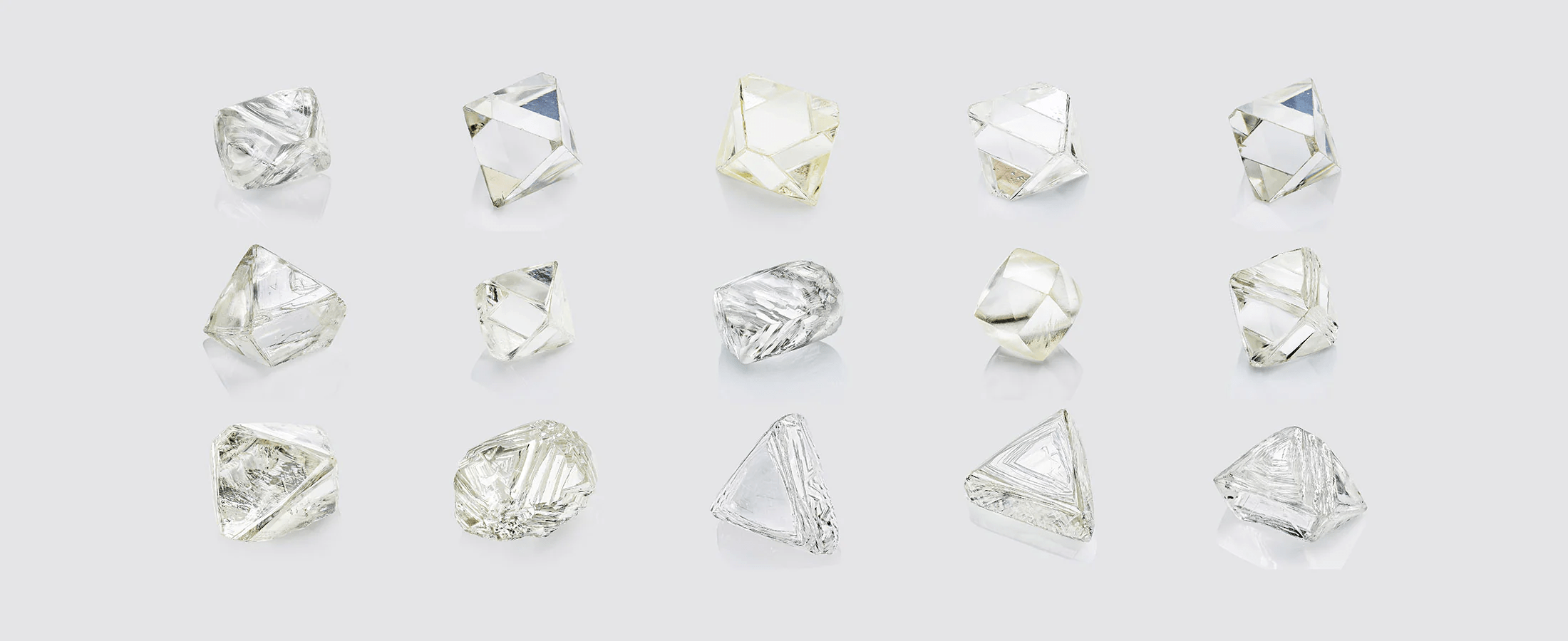
What would you see if you were to hold a rough diamond? Often referred
to as uncut, raw or natural, rough diamonds are the ones that haven’t
been cut, polished or treated in any way.
Rough diamonds look exactly as they do when they have just been mined –
mostly colourless crystal formations with rough surface but great
lustre.
Why do we say diamonds are mostly colourless? It is because most of them
have traces of brown or yellow. Occasionally you will also see red,
blue, green, orange and pink. Completely colourless rough diamonds are
exceedingly rare, with price to match.
Once they have been mined, rough diamonds undergo a certification
process that ensures they haven’t been obtained illegitimately or from
any of the conflict areas. Diamond suppliers who observe these
regulations are issued a so-called Kimberley Process Certificate.
Before they are ready for processing, rough diamonds are first sorted
based on their quality level. The stones that meet the standards are
then sent to professionals for cutting and polishing that result in
enhanced brilliance and the finished product as we all know it.
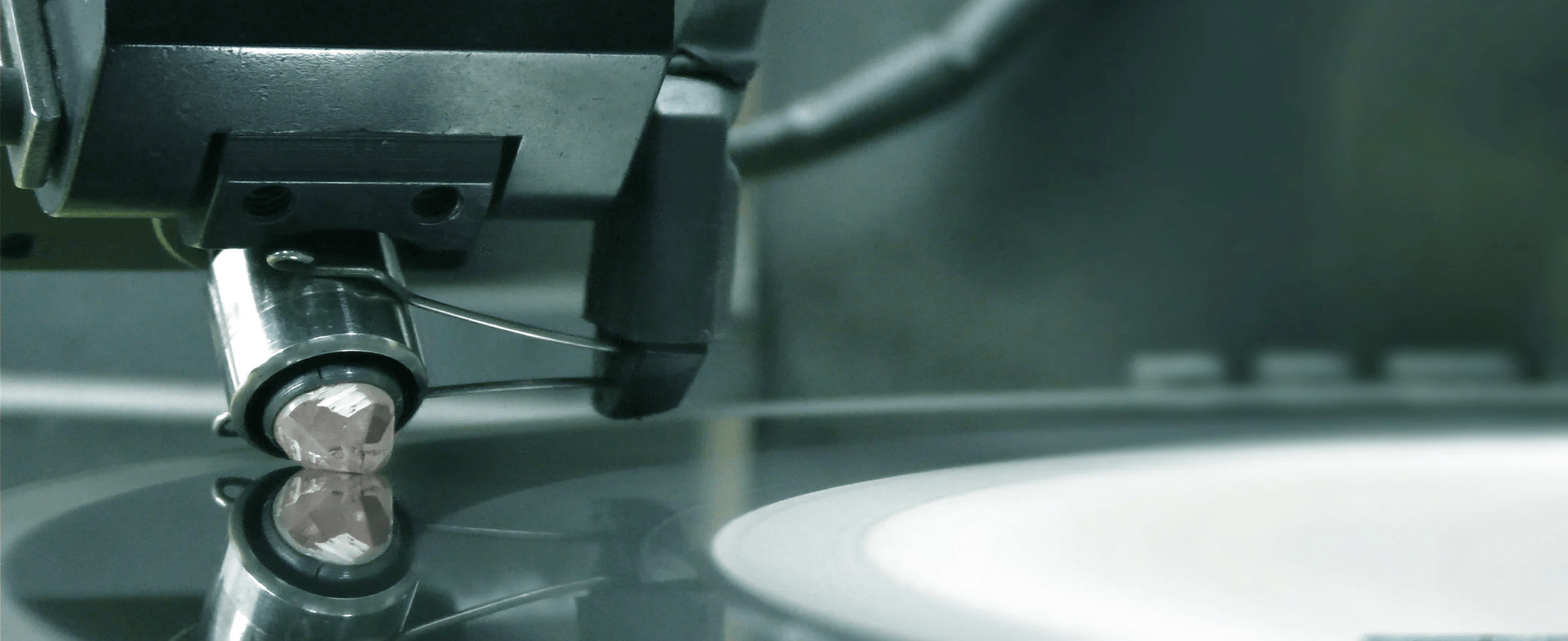
To achieve the perfect results and the maximum brilliance, rough
diamonds are processed in six different stages.
1. MARKING
The diamond first undergoes an assessment with special emphasis on
locating irregularities known as inclusions. Inspecting them allows the
specialists to determine the best cut for maximum value extraction. Only
then can the diamond be marked for further processing.
2. CLEAVING
Cleaving is generally reserved only for larger diamonds. Dividing rough
diamonds into smaller stones without shattering them requires careful
planning and precise execution. It is done by cutting a groove into the
stone and making it split along the prepared line by using a mallet.
3. SAWING
Once the rough stone is prepared, it is cut using specialist saws.
Diamonds are incredibly tough which is why, even at 4,000 revolutions
per minute, the process can take up to eight hours. That is also why
companies are increasingly investing in laser equipment.
4. ROUNDING
Rounding is what gives diamonds their characteristic cone shape. To
shape one, the specialists mount two diamonds on two separate rotating
tools that keep them touching. The resulting friction is what rounds the
diamond to look like a cone.
5. FACETING
The rounded diamond is given to two different specialists, lapper and
brillianteer, for faceting. Faceting refers to polishing the diamond to
create its facets, one by one and with the highest level of precision.
6. FINISHING TOUCHES
The faceted diamond is considered a finished product only after it is
carefully inspected. Once that is done, approved diamonds are boiled in
sulfuric and hydrochloric acids to remove any processing residue and
bring out their brilliance.
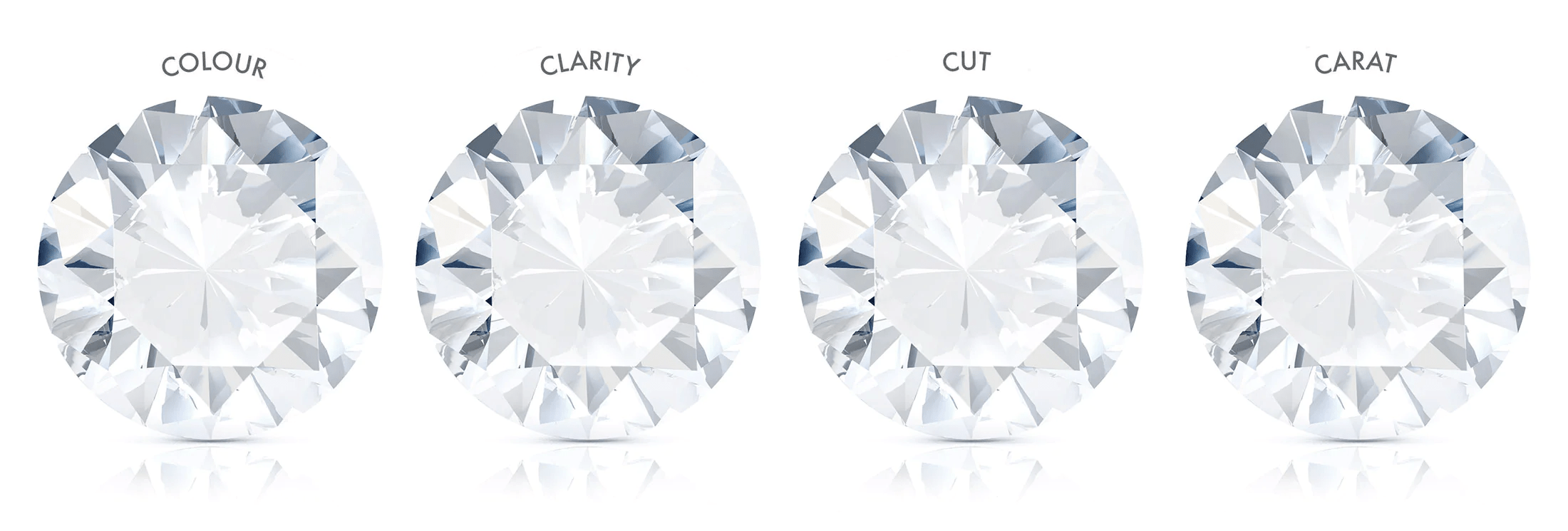
We know how overwhelming it can be to have to choose a high-quality diamond. That is why we will use our expertise to give you information on the four most vital diamond attributes, also known as the 4 C’s: colour, clarity, cut and carat weight.
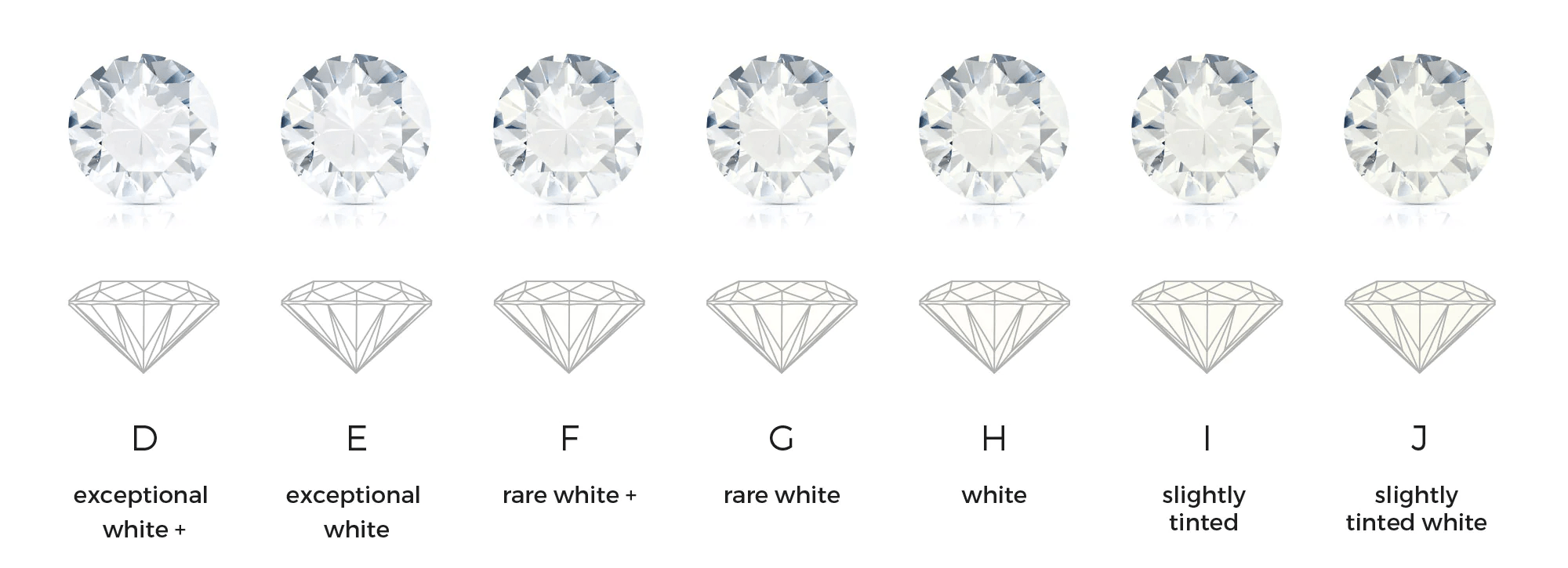
The most widely used diamond colour scale is the Gemological Institute
of America scale. It categorizes diamonds into 14 individual grades,
referring to them by letters D to Z.
The most desirable and expensive diamonds are white or colourless stones
belonging to grades D, E and F. Unless you are a professional, the
difference between them isn’t visible to the eye.
Diamonds with hints of yellow are still highly desirable, although not
nearly as much as the colourless. The grades they are categorized into
are K, L and M.
Of course, some diamonds show too much yellow and aren’t considered
desirable enough by most people. They are the diamonds from S, T, U, V,
W, X, Y and Z grades.
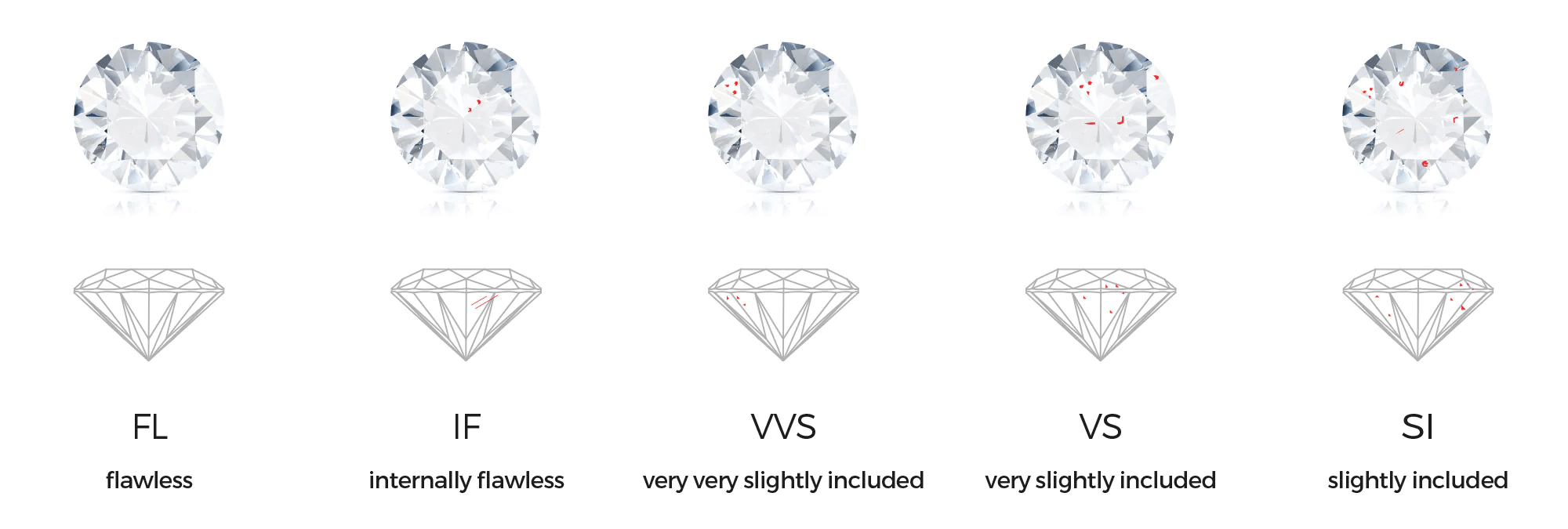
The most widely used diamond clarity scale is once again the GIA scale.
To grade a diamond, it is placed under 10x magnification and inspected
for irregularities and imperfections known as inclusions.
The rarest of all diamonds are of course Flawless or FL diamonds. Only
one in 5,000 diamonds belongs in this grade.
Generally just as desirable are Internally Flawless or IF diamonds. They
are almost without inclusions, which can only be seen under
magnification.
Highly valued are also Very Very Slightly Included or VVS1 and VVS2
diamonds. They generally don’t have larger inclusions, only a slightly
higher number of irregularities.
Only slightly more imperfect are Very Slightly Included VS1 and VS2
diamonds. Still, their inclusions can only be seen under magnification.
Diamonds that aren’t very sought after belong to Slightly Included or
SI1 and SI2 grades. This is because their inclusions are visible to the
naked eye.
Diamonds that don’t meet the usual quality standards belong to Included
or I1, I2 and I3 grades. Their inclusions aren’t just visible, but
affect the diamond’s durability as well.
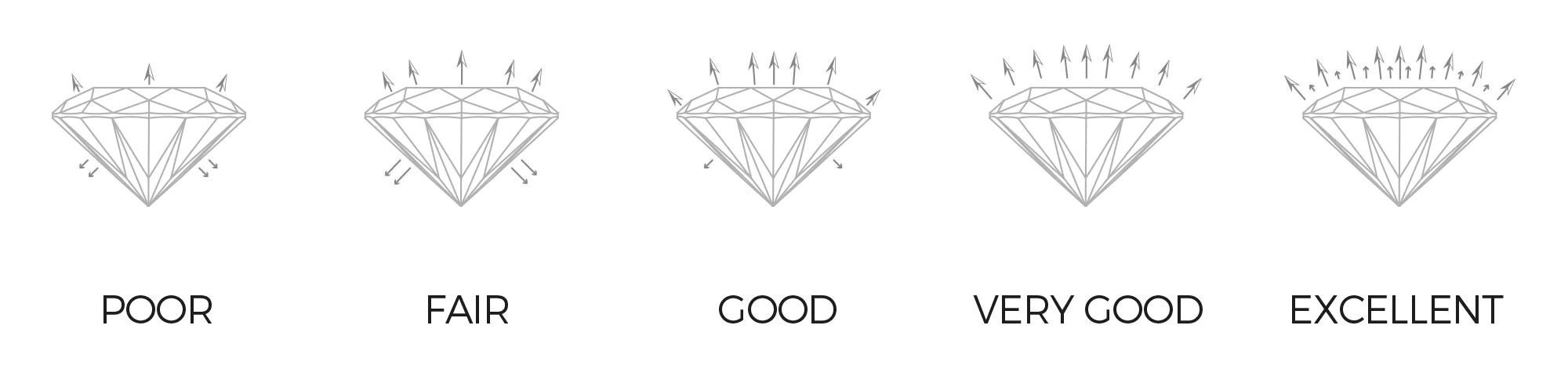
Contrary to popular belief, the cut of the diamond does not refer to its
shape. It is a term used in regard to the overall quality of the way the
diamond has been cut from its rough form. It ranges from very shallow to
very deep.
The quality of the cut is vital because it affects all other attributes
of the diamond, including its size and brilliance.
How does the cut affect the diamond’s size? A poor cut does not utilize
as much of the stone as it could if it had been processed better.
How does the cut affect the diamond’s brilliance? For example, if the
stone has been cut too shallow or too deep, the light escapes through
its bottom and doesn’t reflect enough light.
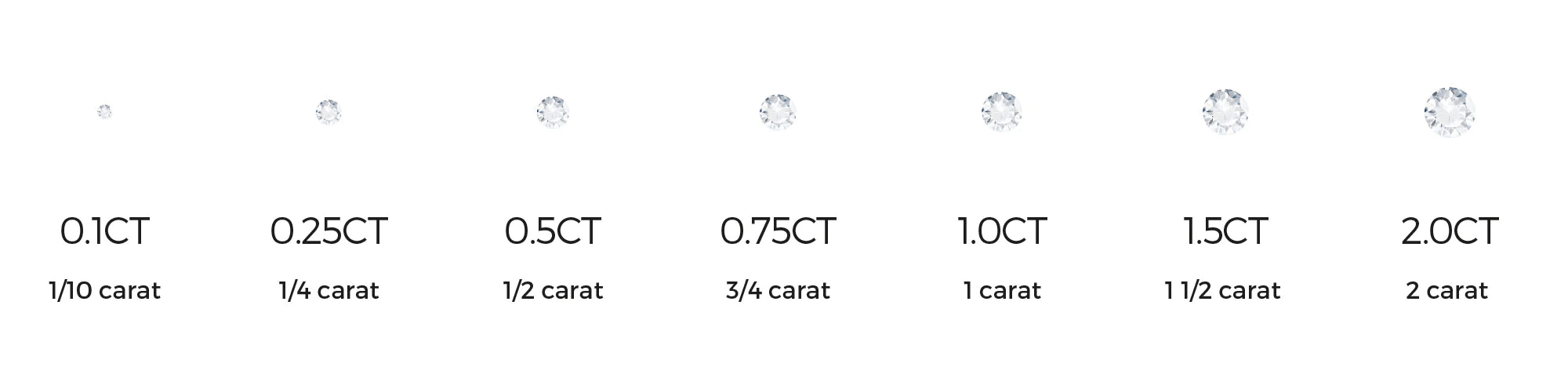
Carat weight refers simply to the diamond’s weight. One carat equals 200
milligrams, the most common carat weights being .50, .75, 1, 2 and 5
carats.
To choose the highest quality diamond, it is important to know that a
higher carat weight does not necessarily mean a larger diamond.
Size as such can’t be accurately reflected by carat weight because it is
significantly affected by both cut and shape. For example, the Marquise
cut is known for making lighter diamonds appear larger.
That is why, when purchasing diamonds, it is vital to take both carat
weight and size into account.
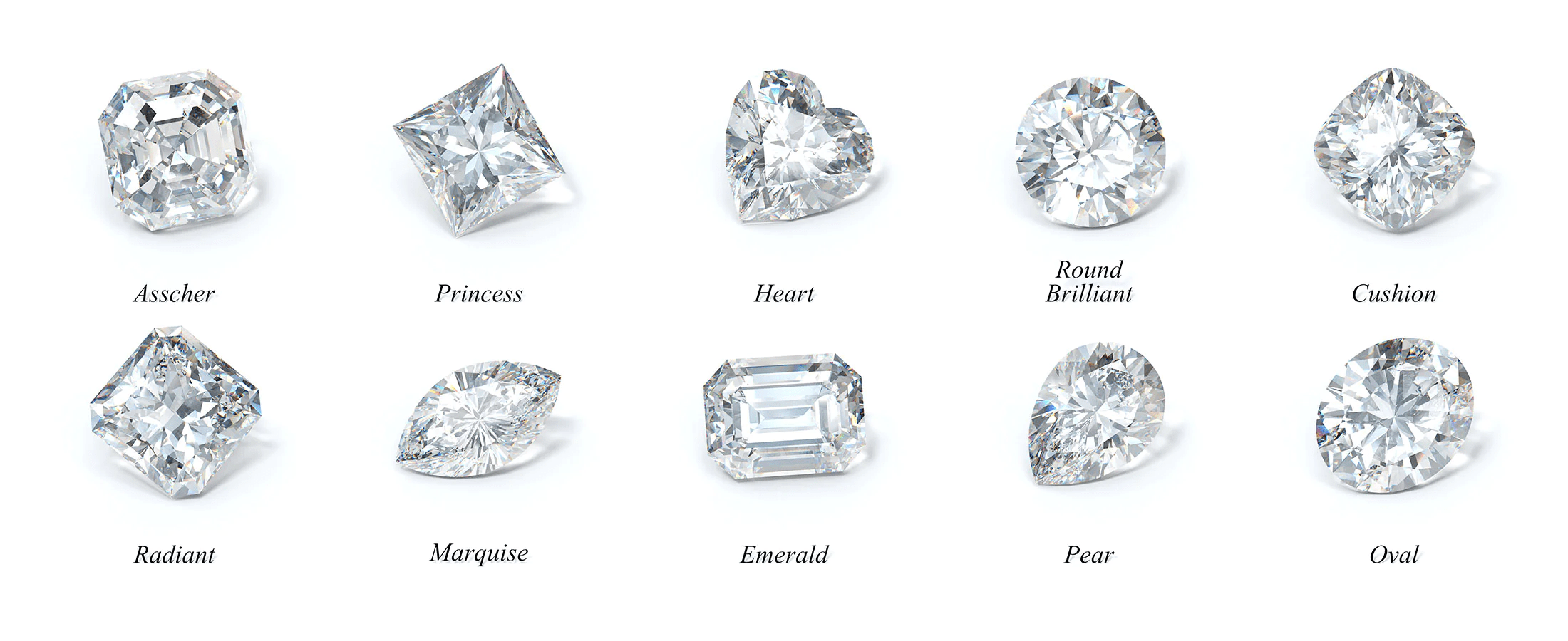
We know choosing among the many gorgeous diamond shapes can seem
impossible. That is why we will tell you what to watch out for and what
exactly makes each of the shapes desirable.
Before we go into individual shapes, it is good to know the following
terms: facet, table and crown. While facet refers to any of the flat
surfaces making up the shape of a diamond, table is the flat surface
located at its very top. Finally, the entire visible surface of the
diamond is called the crown.
ROUND BRILLIANT
Being the most sparkling and versatile, the Round Brilliant cut is the
buyer’s first choice more than half the time. While its shape will never
go out of style, its cut offers the most brilliance.
PRINCESS
Designed in the 1970s, the Princess cut combines the best of two worlds
– the evergreen elegance of classic shapes and the striking sharpness of
modern cuts.
EMERALD
Worn by Grace Kelly herself, the Emerald cut is one of the oldest and
most desirable. Its large table and striking ‘hall of mirrors’ effect
make it at once unique and mesmerizing.
ASSCHER
Boasting both the ‘hall of mirrors’ effect and incredible lustre, the
Asscher cut is among the most stunning shapes. Higher crown and smaller
table can be thanked for its striking brilliance.
PEAR
Sometimes referred to as Teardrop, the Pear cut is one of the most
sophisticated shapes. The gentle curve ending in a single point makes it
simple and stunning at the same time.
RADIANT
Being the first square diamond with a brilliant cut, the Radiant cut
makes for the most dramatic choice. The combination of shape and
numerous facets results in a vibrant diamond.
OVAL
Boasting the sparkle of a Round Brilliant, the Oval cut could be called
its rarer, more modern version. Its elegant, elongated shape creates the
illusion that the diamond is bigger than it actually is.
CUSHION
Also referred to as Pillow, the Cushion cut has been around for two
centuries. Still, it is one of the rarest choices, making it both
special and valuable.
HEART
As the unmistakable symbol of love, the Heart cut is the perfect choice
for the romantic. Since the shape can be hard to make out in smaller
diamonds, it is recommended to go higher than .50 carats.
MARQUISE
Being both sophisticated and striking, the Marquise cut is made to
impress. Its shape makes the fingers appear more slender, while the
optimized carat weight makes the stone appear bigger.
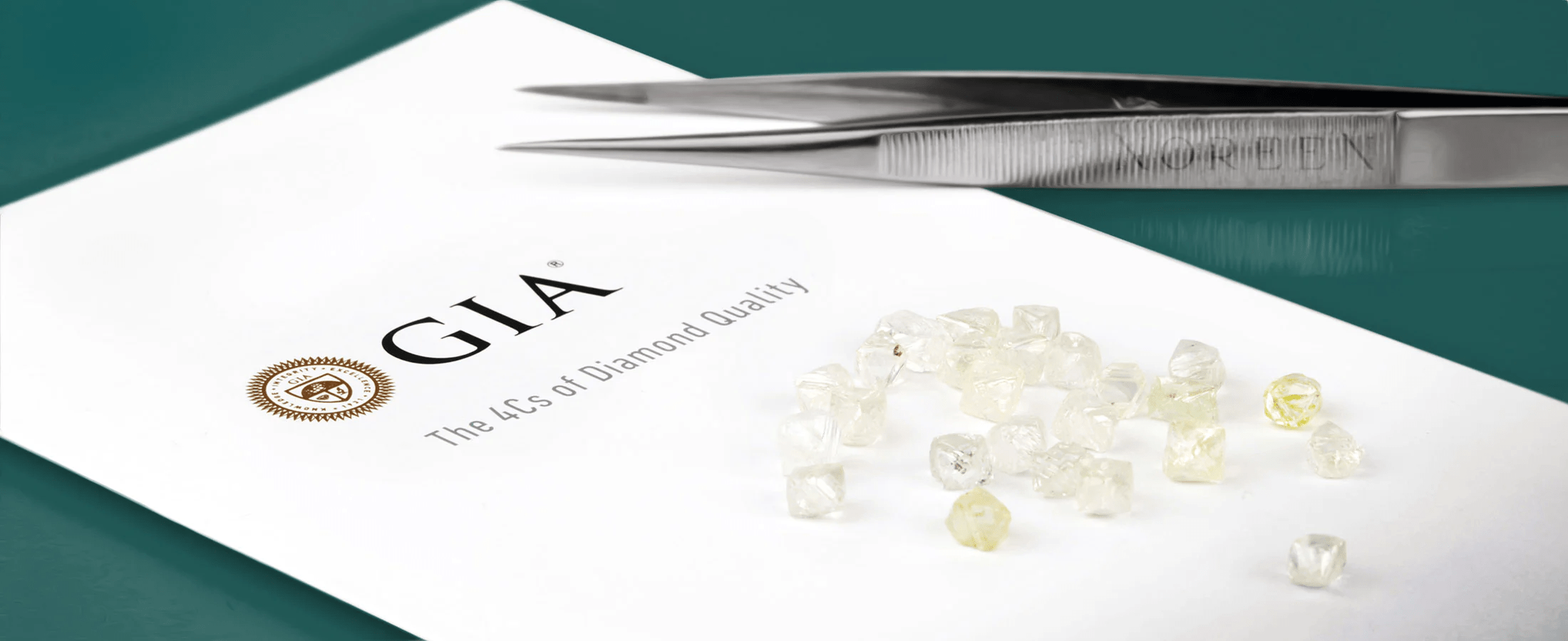
Never buy a diamond that doesn’t come with a certificate of authenticity
issued by an independent institute. It is safe to make an exception only
when purchasing jewellery featuring diamonds smaller than .30 carats.
What are the acceptable forms of diamond certification? What is most
important is that the certification process is conducted by an institute
that is both licensed and independent.
Such institutes employ unbiased gemologists who take exact measurements
and assess all the diamond’s attributes before issuing a certificate.
The most well-known certificate of authenticity is the one issued by the
Gemological Institute of America (GIA).
Keep in mind that authentic diamonds are nowadays also marked with laser
inscriptions. They are usually found on the diamond’s girdle and can be
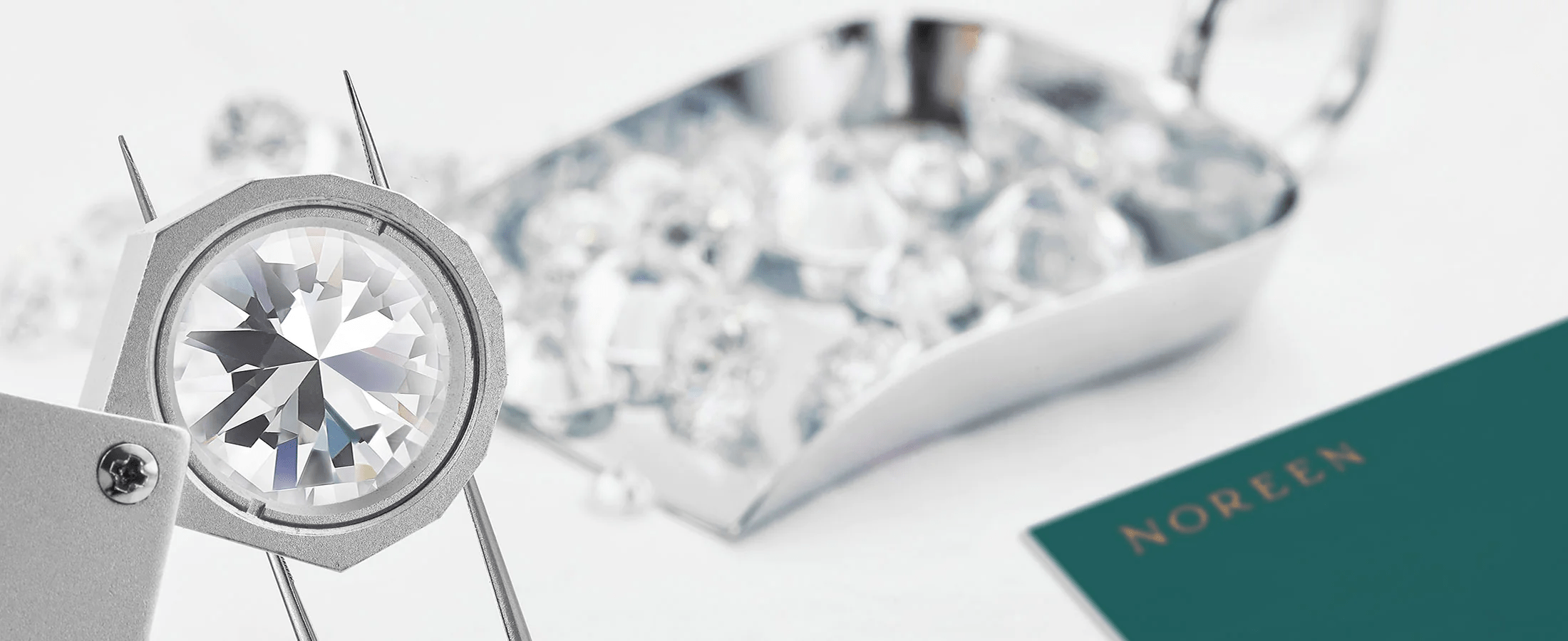
easily seen by using a magnification loop.